
XCMG Parts
Top 10 XCMG Crane Spare Parts to Keep in Stock
For crane dealers, rental companies, contractors, and maintenance teams, keeping the right XCMG crane spare parts in stock can significantly reduce equipment downtime. A crane may remain out of service because of a relatively small component, while waiting several days or weeks for the replacement part.
The challenge is deciding which parts are worth stocking. Some components are frequently replaced because of normal wear, while others are less common but critical when a failure occurs. A practical spare parts strategy should therefore consider failure frequency, operating conditions, lead time, part cost, and the importance of the component to crane operation.
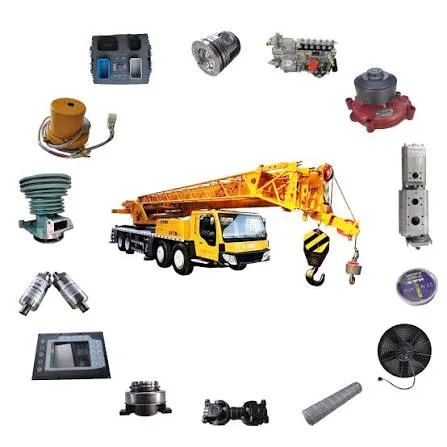
This guide covers 10 categories of XCMG crane spare parts that are worth considering for regular inventory, together with practical advice for identifying and purchasing the correct replacement parts.
Why Should You Keep XCMG Crane Spare Parts in Stock?
Crane maintenance is highly sensitive to downtime. When a hydraulic component, electrical device, or undercarriage part fails, the equipment may not be able to return to work until the replacement is installed and tested.
Maintaining a reasonable inventory allows maintenance teams to respond immediately to common failures instead of starting the sourcing process after a breakdown has already occurred.
Stocking spare parts is particularly important for companies operating multiple cranes. A common part used across several machines can provide much greater inventory value than a highly model-specific component that is rarely replaced.
Before building an inventory, it is useful to classify parts into three groups:
- Fast-moving parts: components frequently replaced during normal maintenance.
- Critical spare parts: components with a lower failure rate but significant consequences when they fail.
- Model-specific parts: components that should normally be purchased according to the exact crane model and configuration.
1. Hydraulic Filters
Hydraulic filters are among the most practical XCMG crane spare parts to keep in stock.
Crane hydraulic systems depend on clean hydraulic oil. Contaminated oil can accelerate wear in pumps, valves, cylinders, and other hydraulic components.
Filters are therefore commonly replaced as part of preventive maintenance. Their relatively low cost and regular replacement cycle also make them suitable for inventory stocking.
When purchasing hydraulic filters, check the filter element specification, dimensions, filtration rating, connection configuration, and the applicable crane model.
2. Hydraulic Hoses and Fittings
Hydraulic hoses operate under high pressure and are exposed to vibration, movement, temperature changes, and mechanical wear. Damage to a hose can result in hydraulic oil leakage and immediate loss of machine performance.
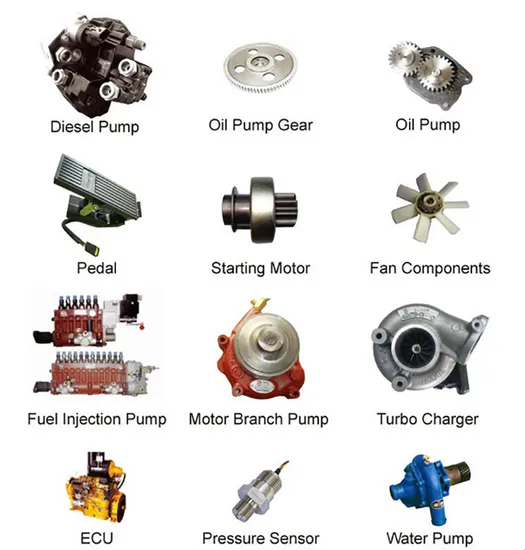
For maintenance teams, keeping commonly used hydraulic hoses, fittings, adapters, and sealing components available can shorten repair time.
However, hoses should not be selected only by outside diameter. The working pressure, hose construction, connection type, length, and application must all be verified before installation.
For model-specific hose assemblies, the original hose identification or part number is the safest reference.
3. Hydraulic Seals and Seal Kits
Hydraulic cylinders and other hydraulic components rely on seals to prevent internal and external leakage.
Over time, seals can wear because of pressure, temperature, contamination, chemical exposure, or normal operating cycles. A damaged seal may cause oil leakage, reduced cylinder performance, or internal bypass.
For maintenance operations, seal kits can be more practical than purchasing a complete hydraulic cylinder when the cylinder itself remains serviceable.
A useful inventory may include commonly used cylinder seal kits and sealing components, but the exact dimensions and material should always be checked against the application.
4. Hydraulic Valves
Hydraulic valves control the direction, pressure, and flow of hydraulic oil throughout the crane system.
Depending on the circuit, cranes may use different types of control valves, relief valves, check valves, directional valves, and other hydraulic control components.
A valve failure can have a significant impact on crane operation. For fleets with several machines using the same valve configuration, keeping selected replacement valves in stock can reduce downtime.
Before ordering, verify the valve model, hydraulic circuit function, pressure rating, port configuration, and part number. Similar-looking hydraulic valves are not necessarily interchangeable.
5. Hydraulic Pumps and Pump Components
The hydraulic pump is one of the most important components in a crane’s hydraulic system. Pump problems can affect lifting, steering, boom movement, outrigger operation, and other hydraulic functions depending on the crane design.
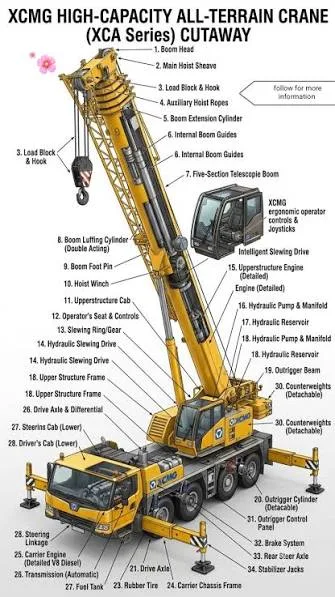
Complete hydraulic pumps are relatively expensive, so stocking every possible pump is usually not practical.
A better approach is to identify the pump models used across your fleet and evaluate their failure history and procurement lead time. For high-utilization equipment or critical machines, keeping a suitable replacement pump or important pump components available may be justified.
When sourcing a hydraulic pump, always confirm the pump model, displacement, rotation direction, mounting configuration, shaft specification, and hydraulic system requirements.
6. Electrical Sensors and Switches
Modern cranes rely on numerous electrical sensors and switches to monitor operating conditions and control machine functions.
Common examples include pressure sensors, temperature sensors, position switches, limit switches, and other monitoring devices.
Electrical components are often small and relatively inexpensive compared with the downtime they can cause when they fail. For this reason, selected sensors and switches can be useful additions to a maintenance inventory.
Do not select a replacement based only on physical appearance. Electrical specifications, signal type, operating range, connector configuration, and mounting dimensions should be verified.
7. Fuses, Relays, and Electrical Components
Basic electrical components are another category worth maintaining in stock.
Fuses, relays, connectors, switches, and related electrical components can fail because of electrical overload, vibration, moisture, corrosion, or age.
These parts are generally inexpensive and easy to store. A small inventory can therefore provide good protection against minor electrical failures that might otherwise keep a crane idle.
For fleet maintenance, it is useful to create a list of commonly used electrical components by crane model and electrical system.
8. Brake and Friction Components
Braking systems are critical to safe crane operation, and wear-related components should be monitored closely.
Depending on the crane type and configuration, relevant replacement components may include brake discs, friction plates, brake pads, seals, springs, and other brake-system parts.
These parts should be selected according to the specific brake assembly rather than simply by crane model. Different configurations may use different components even within the same general crane series.
Because braking performance directly affects safety, replacement parts should meet the required technical specifications and should be properly inspected after installation.
9. Undercarriage Parts for XCMG Crawler Cranes
For companies operating XCMG crawler cranes, undercarriage components deserve special attention.
Track chains, track shoes, track rollers, carrier rollers, front idlers, and sprockets are exposed to continuous mechanical loads and ground contact. Working conditions such as abrasive soil, mud, rock, and uneven terrain can accelerate wear.
Not every undercarriage component needs to be kept in large quantities. Inventory planning should be based on machine utilization, working environment, fleet size, and historical replacement frequency.
For more information about this category, see the related guide to XCMG crawler crane parts.
10. Wear Parts and Sealing Components
Small wear parts and sealing components are easy to overlook but can become important during maintenance.
Examples include O-rings, sealing rings, gaskets, retaining components, bushings, and other replaceable items used in hydraulic, mechanical, and electrical assemblies.
These parts usually require limited storage space and can be purchased in batches. Maintaining an organized selection of commonly used sealing and wear components can prevent minor maintenance work from being delayed while waiting for inexpensive parts.
The exact specification remains important. An incorrect seal material, size, or hardness can cause premature failure even when the component appears to fit.
Which XCMG Crane Spare Parts Should You Stock First?
Not every spare part deserves the same inventory level.
A practical stocking strategy is to rank parts according to several factors:
| Factor | Why It Matters |
|---|---|
| Failure frequency | Frequently replaced parts require faster replenishment |
| Equipment downtime | Critical components deserve higher priority |
| Lead time | Long-lead parts may justify local inventory |
| Part cost | Expensive parts should be stocked selectively |
| Fleet size | More machines generally require more common spares |
| Commonality | Parts shared by several models offer better inventory value |
| Operating conditions | Harsh environments increase wear rates |
For example, filters, seals, hoses, fuses, and other routine maintenance components can normally be stocked in greater quantities.
Hydraulic pumps, specialized valves, electronic control components, and model-specific assemblies may be better managed as critical reserve parts rather than large-volume inventory.
How to Identify the Correct XCMG Crane Spare Parts
One of the biggest purchasing risks is ordering a part that looks correct but is not compatible with the machine.
Before requesting a quotation, prepare as much technical information as possible.
The following information is particularly useful:
- Crane model
- Serial number
- Production year, when relevant
- Component name
- Original part number
- Component manufacturer and model
- Photos of the existing component
- Dimensions or technical specifications
- Quantity required
- Application or installation position
The part number should normally be treated as the primary reference, but it should still be verified against the actual machine configuration.
If the part number is unavailable, clear photographs combined with the crane model and component specifications can help a supplier identify the required replacement.
OEM and Aftermarket XCMG Crane Spare Parts
When building a spare parts inventory, buyers may encounter both OEM and aftermarket replacement options.
OEM parts can provide a straightforward sourcing route when the exact original specification is required. Aftermarket parts can offer additional sourcing options and may be attractive when cost, availability, or replacement flexibility is important.
The decision should not be based on price alone. Buyers should compare material quality, manufacturing consistency, dimensional accuracy, technical specifications, expected service life, supplier traceability, and warranty terms.
For critical hydraulic, braking, lifting, and safety-related components, technical compatibility should always take priority over a lower purchase price.
Buying XCMG Crane Spare Parts from China
China has a large supply base for construction machinery components and replacement parts, making it an important sourcing market for international buyers.
However, buyers should evaluate suppliers based on their ability to identify the correct component, provide technical information, maintain consistent quality, and support international logistics.
For regular purchasing, it is useful to establish a structured parts list containing:
- Part number
- Description
- Applicable crane model
- Manufacturer or brand
- Quantity
- Unit price
- Lead time
- Packaging requirements
- Warranty information
This makes repeat purchasing more efficient and reduces the risk of ordering inconsistent replacement parts.
How to Build a Practical XCMG Crane Spare Parts Inventory
A good inventory does not necessarily mean keeping hundreds of different components in stock.
Start by analyzing the actual maintenance history of your equipment. Identify which components have been replaced most frequently during the past 12–24 months.
Next, separate parts into routine maintenance, high-failure-risk, and critical long-lead categories. Set minimum stock levels for the first two categories and establish a sourcing plan for the third.
For companies operating multiple XCMG cranes, cross-referencing part numbers across the fleet can also reveal components that are shared between different machines. These parts generally provide better inventory efficiency.
Choosing an XCMG Crane Spare Parts Supplier
A reliable supplier should do more than provide a price list.
For B2B buyers, the supplier’s technical communication and parts identification capability are equally important. Before placing a large order, consider asking for:
- Part number confirmation
- Applicable model information
- Technical specifications
- Product photos or drawings
- Material information where relevant
- Quality inspection information
- Packaging details
- Lead time
- Warranty terms
- Export experience
Clear communication before the order can prevent many problems later, especially when dealing with model-specific components.
XCMG Crane Spare Parts from Shiyan Qijing
Shiyan Qijing supplies construction machinery spare parts and replacement components for international customers.
For buyers sourcing XCMG crane spare parts, we can assist with part identification based on available model information, part numbers, component photos, and technical specifications.
Whether you need routine maintenance parts or more specialized replacement components, providing detailed equipment information helps us confirm the correct solution before quotation.
For fleet operators, dealers, and maintenance companies, establishing a repeatable spare parts supply channel can also make future purchasing more efficient.
Conclusion
Keeping the right XCMG crane spare parts in stock is an important part of effective equipment maintenance. Filters, hoses, seals, electrical components, hydraulic parts, braking components, and crawler crane undercarriage parts can all play different roles in a practical spare parts strategy.
The most effective approach is not simply to stock as many parts as possible. Instead, prioritize components according to failure frequency, equipment criticality, lead time, fleet size, and operating conditions.
When ordering replacement parts, always verify the crane model, serial number, part number, specifications, and configuration before purchase. This reduces compatibility risks and helps ensure that the replacement component is suitable for the intended application.
If you are looking for XCMG crane spare parts for fleet maintenance, repair, distribution, or regular inventory, contact Shiyan Qijing with your part numbers or equipment information for a quotation and parts identification.
