
Construction machinery, XCMG Parts
Shangtui Bulldozer Undercarriage Parts Selection Guide
Nov
Shangtui bulldozer undercarriage parts selection depends on matching the component to the correct machine class and configuration. The Shangtui (山推) SD series is the most widely referenced range in parts catalogs, with common designations including the SD13, SD16, SD22, SD32, and SD42 classes, plus derivative variants such as low ground pressure (LGP) and swamp/wetland versions. Undercarriage configuration scales with machine class. Lighter machines use smaller-pitch chains and narrower shoes, while the SD22/SD32 class uses heavier sealed or lubricated track groups with larger-diameter bushings and thicker link sections. These differences affect wear life and the load rating of each component, so parts are not interchangeable across classes even where mounting dimensions appear similar.
Undercarriage Component Terminology and Function
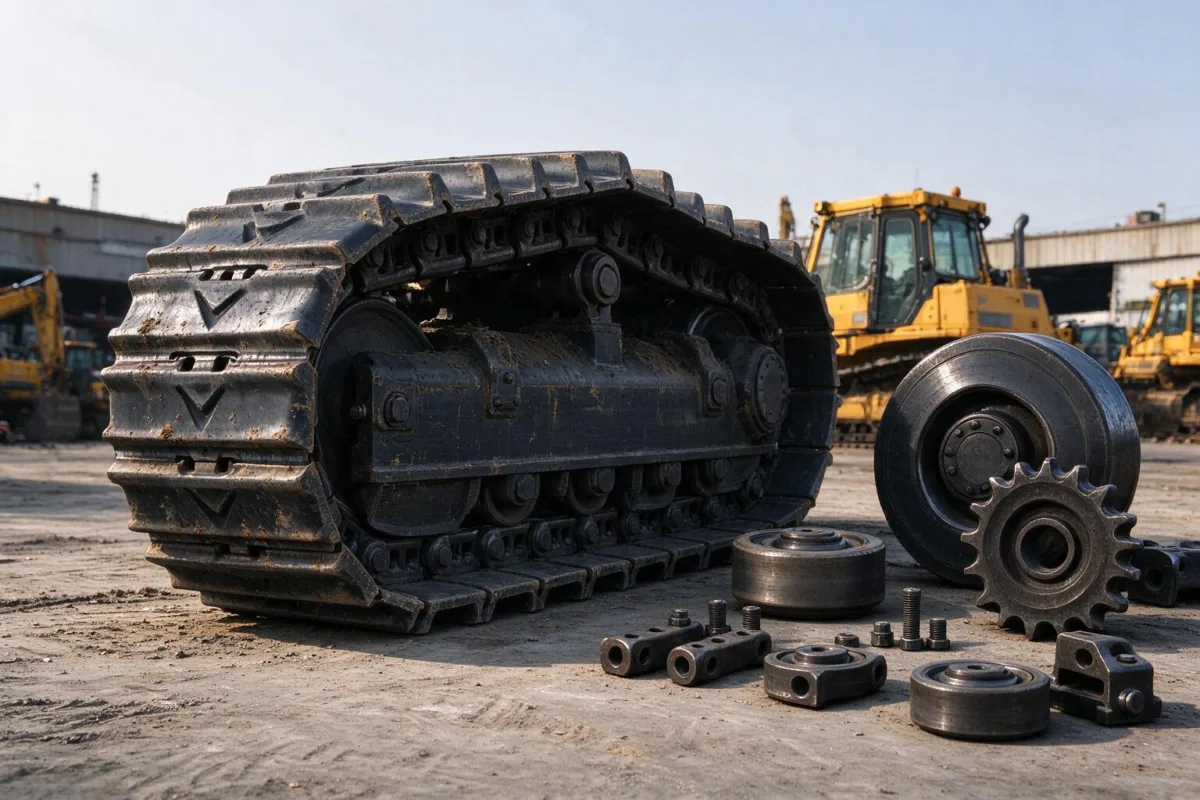
The undercarriage of a Shangtui bulldozer is a wear system in which each component affects the life of the others. The track group consists of link assemblies, track pins and bushings, the master link, track shoes, and mounting hardware. Sealed and lubricated (SALT) track groups retain lubricant in the pin-bushing joint and generally extend service life in abrasive conditions compared with non-sealed designs.
Track rollers (bottom rollers) carry the machine weight and guide the chain along the ground run. Carrier rollers (top rollers) support the chain return run. Roller flanges locate the link rails and influence chain tracking, so flange wear affects alignment as well as load distribution. The front idler guides the chain and, together with the recoil spring and cylinder, maintains track tension. The sprocket drives the chain through engagement with the bushings.
Track shoes vary by width, grouser height, and grouser pattern. Standard, LGP, and swamp configurations use different shoe widths to control ground pressure for the application.
| Component | Primary function | Key wear interaction |
|---|---|---|
| Link assemblies | Form the chain and carry shoes | Pitch elongation loads sprocket and rollers |
| Pins and bushings | Provide the articulating joint | Bushing wear changes sprocket engagement |
| Track rollers | Carry weight, guide chain | Flange wear affects tracking |
| Carrier rollers | Support return run | Bearing and flange wear |
| Front idler | Guide chain, maintain tension | Misalignment accelerates link wear |
| Sprocket | Drive the chain | Worn teeth accelerate bushing wear |
| Track shoes | Traction and ground pressure | Grouser wear reduces penetration |
Wear occurs as a system: a worn sprocket accelerates bushing wear, and a stretched chain increases shock loading on rollers and idlers. Component-level replacement without assessing the whole group often shortens the life of the new parts.
Application-Based Selection: Standard, LGP, and Wetland Undercarriage
Shangtui bulldozer undercarriage configuration should be matched to the ground conditions and duty cycle the machine actually operates in. Three broad configurations cover most applications.
Standard Undercarriage
The standard configuration suits general earthmoving, grading, and dozing on firm to moderately soft ground, where traction and flotation are balanced. It is the baseline against which other configurations are measured and typically offers the best compromise between drawbar pull, maneuverability, and component life on stable soils.
Low Ground Pressure (LGP)
LGP undercarriage uses wider shoes and extended track length to reduce ground pressure. This configuration is suited to soft, wet, or sensitive surfaces such as landscaping, pipeline right-of-way work, and refuse handling, where reduced sinkage and lower surface disturbance matter more than raw traction.
Swamp and Wetland
Swamp or wetland versions use very wide shoes and specific roller arrangements for saturated, low-bearing-capacity ground. Parts from these versions are not interchangeable with standard machines; track groups, rollers, and frames differ in dimension and load rating.
Abrasive and High-Impact Conditions
Abrasive rock and quarry work favors sealed and lubricated track groups together with wear-resistant bushing and shoe materials. High-impact conditions place greater demand on link and roller strength, so component grade selection matters as much as configuration.
Configuration Integrity
Selection should follow the machine’s original configuration unless a documented conversion is intended. Changing shoe width or track length alters ground pressure, steering behavior, and load on the final drive, and unplanned changes can shorten component life across the undercarriage.
Wear Limits and Inspection Before Replacement
Undercarriage wear on Shangtui bulldozers is progressive and uneven across components, so replacement decisions should be based on measured values rather than visual impression alone. The following checks apply across the SD series and comparable models, with limits taken from the machine’s service manual for the specific track group fitted.
Track pitch and chain stretch
Measure track pitch across four or five links and divide to obtain the average pitch. Compare this against the new pitch specification. Elongation beyond the manufacturer’s service limit indicates the link assembly is due for replacement, or for turning where the link rails remain within height tolerance and the pin and bushing have not yet been reversed.
Bushing and sprocket engagement
Measure bushing outside diameter at the sprocket contact area, where wear is concentrated. Bushing wear changes the effective pitch at engagement and accelerates sprocket tooth wear. A worn bushing paired with a new sprocket, or the reverse, shortens the life of both.
Rollers and idlers
Check track roller and idler tread diameter against the service limit. Inspect flange height, seal condition, and evidence of oil leakage on lubricated rollers. A leaking roller indicates seal failure and should be scheduled for rebuild or replacement before bearing damage occurs.
Sprockets, shoes, and links
Inspect sprocket tooth wear at the pitch line and the tooth profile. A hooked or sharpened profile indicates replacement. Check shoe grousers for height loss and shoe plates for cracks. Examine link rail height and pin and bushing end play.
| Component | Measurement | Action threshold |
|---|---|---|
| Link assembly | Track pitch elongation | Manufacturer service limit |
| Bushing | Outside diameter at sprocket contact | Service limit |
| Roller/idler | Tread diameter, flange height | Service limit |
| Sprocket | Tooth wear at pitch line, profile | Hooked or sharpened |
| Shoes | Grouser height, plate condition | Height loss, cracks |
Record measurements at each inspection to trend wear rates and plan group replacement rather than reactive single-part replacement.
Genuine, OEM, and Aftermarket Parts: Identification Points
Shangtui bulldozer undercarriage components are typically grouped into three categories. Genuine parts carry the manufacturer’s branding and packaging. OEM parts are produced to the original specification, often by the same supplier that serves the assembly line, but are sold under a different label. Aftermarket parts are produced by third-party manufacturers and vary widely in documentation, material specification, and warranty terms. Each category should be evaluated on its own merits rather than assumed equivalent.
Part numbers should be verified against the machine serial number and the applicable parts catalog. Cross-reference numbers across catalog supersessions and supplier listings; visual matching of links, idlers, or sprockets is unreliable because similar castings and forgings can differ in dimension and metallurgy.
For links, bushings, pins, and sprocket teeth, request material and heat treatment data. Surface hardness and case depth directly influence wear life in abrasive soil conditions, and these values should be stated in writing rather than inferred from price.
On sealed track groups and rollers, inspect seal design and lubrication provisions. Seal quality is a common differentiator between price tiers, and a lower-cost assembly may use a simpler seal configuration with a shorter service interval.
Finally, confirm packaging markings, traceability documentation, and the supplier’s warranty and return terms for fitment issues.
| Category | Documentation | Material specification | Warranty terms |
|---|---|---|---|
| Genuine | Manufacturer catalog and packaging | Original specification | Manufacturer-backed |
| OEM | Supplier documentation, specification sheet | Original specification | Supplier-defined |
| Aftermarket | Varies; may be limited | Varies; request in writing | Varies by supplier |
Fitment Checks and Installation Considerations
Fitment for Shangtui bulldozer undercarriage parts is determined by measured dimensions, not by the model name alone. Before ordering a track group, confirm the track pitch, link count, shoe width, and mounting bolt pattern. These four parameters govern whether the chain and shoes will match the sprocket, roller path, and frame. A track group that shares a model designation but differs in pitch or link count will not run correctly.
For rollers and idlers, verify mounting dimensions against the machine’s undercarriage frame: bolt spacing and hole diameter, flange dimensions, and shaft diameter. Flange height affects track guidance, and an incorrect shaft diameter prevents proper bearing seating.
Track tension must be set to the manufacturer’s specification for the specific machine configuration and working condition. Over-tensioning accelerates pin, bushing, and roller wear and adds load to the front idler and recoil system.
| Check | Parameter to confirm |
|---|---|
| Track group | Pitch, link count, shoe width, bolt pattern |
| Roller/idler | Mounting dimensions, flange dimensions, shaft diameter |
| Sprocket | Tooth count, pitch match, chain condition |
Replace related hardware such as track shoe bolts and nuts where specified, and tighten to the correct torque values. When replacing a sprocket, assess the chain condition first. Fitting a new sprocket to a heavily worn chain, or a new chain to a worn sprocket, usually produces rapid, uneven wear across both components.
Maintenance Practices That Extend Undercarriage Life
Undercarriage components typically account for a significant share of bulldozer operating cost, and wear rates respond directly to daily maintenance and operating decisions. For Shangtui dozers across the SD and series models, consistent practices below reduce chain, bushing, roller, and sprocket wear.
Track Tension
Track tension should be checked at the interval specified in the machine’s maintenance schedule, and more frequently in abrasive or high-impact conditions. Correct sag varies with soil type and ambient temperature: operation in mud and loose soil generally calls for slightly looser tracks to allow material to clear the chain, while packed or frozen ground calls for adjustment toward the tighter end of the specification. Tension set cold will tighten as the chain warms, so adjustments should account for expected operating temperature.
Cleaning
Packed material in the chain links, around bushings, and in the roller and sprocket area should be removed regularly, particularly in mud and clay. Retained material accelerates abrasive wear on pins and bushings and can cause the chain to ride incorrectly on the sprocket, leading to mis-tracking and uneven tooth wear.
Operating Technique
Unnecessary reverse travel and sharp, pivot-style steering both accelerate wear on chain, bushings, and sprocket teeth. Gradual turns and planned travel paths reduce this load.
Configuration Matching
Shoe width and undercarriage configuration should match the working surface. Wide shoes suit soft ground; narrower shoes are preferable on rock and hard surfaces where flotation is not required.
Wear Tracking
Measuring chain pitch, bushing diameter, roller wear, and sprocket tooth profile over time supports planned replacement and prevents worn components from damaging adjacent parts.
Supplier Evaluation and Procurement Checklist
Procurement of Shangtui bulldozer undercarriage parts should be documented at each stage to reduce fitment risk and inventory drift.
Documentation and Cross-Reference
Request the applicable model series, serial range, and part numbers in writing. Shangtui machines share component families across series, but serial breaks can change track roller, idler, sprocket, and link group configurations. The supplier should confirm its cross-reference against the machine data provided, not against a general model listing. Where a cross-reference differs from the OEM number, request the basis for the substitution in writing.
Material and Dimensional Specifications
Ask for material and dimensional specifications for wear components, including hardness and tolerance data where available. Track link hardness, bushing and pin surface hardness, roller shell diameter tolerance, and sprocket tooth profile are the parameters that most directly affect service life. Suppliers who cannot supply this data should be treated as unverified for high-hour applications.
Commercial Terms
Confirm lead time, minimum order quantity, and whether individual components are available separately from complete track groups. Mixed availability affects both repair strategy and stocking levels. Clarify warranty coverage, the process for handling fitment disputes, and return conditions before purchase, including whether return freight is shared.
Fleet Standardization
For fleet operations, standardize part numbers across machines of the same configuration. A single reference per position simplifies inventory, warranty tracking, and maintenance planning across the fleet.
| Check | Required Response |
|---|---|
| Model, serial range, part numbers | Written confirmation with cross-reference basis |
| Material and hardness data | Specification sheet or test report |
| Tolerances | Dimensional limits for wear parts |
| Lead time and MOQ | Per line item, component vs. group |
| Warranty and returns | Terms in writing before order |
