The undercarriage is a critical mechanical system on a crawler crane. It supports the machine’s weight, transfers travel power to the ground, and allows the crane to move and position itself on the job site. Because crawler cranes often operate under heavy loads and on demanding surfaces, undercarriage components are exposed to continuous mechanical stress and wear.
For crane owners, fleet operators, maintenance companies, dealers, and spare parts distributors, timely replacement of worn undercarriage components can help maintain machine availability and reduce the risk of secondary damage.
Common XCMG crane undercarriage parts include track rollers, carrier rollers, front idlers, sprockets, track chains, track shoes, pins, bushes, and related mounting components.
This guide explains the main components, common wear symptoms, identification methods, and purchasing considerations for XCMG crane undercarriage parts.
What Are XCMG Crane Undercarriage Parts?
XCMG crane undercarriage parts are the components that support and guide the crawler system and transfer travel forces between the machine and the ground.

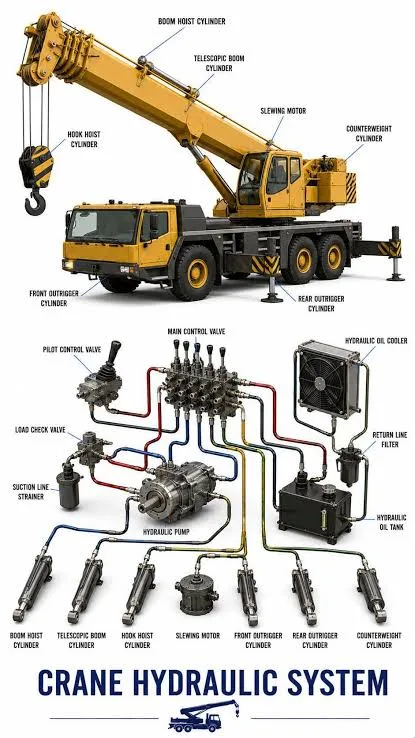
The exact configuration depends on the crawler crane model and undercarriage design. Therefore, buyers should always confirm compatibility using the machine model, serial number, original part number, and physical specifications.
Common components include:
- Track rollers
- Carrier rollers
- Front idlers
- Sprockets
- Track chains
- Track shoes
- Track pins
- Track bushes
- Roller seals
- Idler assemblies
- Track adjuster components
- Mounting hardware
These components work together, so excessive wear in one part can accelerate wear in other components.
Main XCMG Crane Undercarriage Components
1. Track Rollers
Track rollers support the weight of the crawler crane and guide the track chain along the lower section of the undercarriage.
They operate under high loads and are exposed to dirt, water, vibration, and repeated movement.
Common signs of track roller problems include:
- Abnormal noise
- Oil leakage
- Excessive wear
- Uneven rotation
- Damaged roller surfaces
- Excessive track movement
A leaking roller should be inspected promptly because loss of internal lubrication can accelerate wear.
When sourcing replacement track rollers, verify the roller dimensions, mounting arrangement, flange configuration, and applicable machine model.
2. Carrier Rollers
Carrier rollers support the upper section of the track chain and help maintain the correct track path.
Although they carry less load than lower track rollers, they still operate in a demanding environment.
Possible problems include:
- Excessive wear
- Abnormal noise
- Seized rotation
- Surface damage
- Oil leakage
A carrier roller that does not rotate properly can increase friction and accelerate track wear.
3. Front Idlers
The front idler guides the track chain around the front of the crawler frame.
It also works with the track adjustment mechanism to maintain appropriate track tension.
Common signs of idler wear include:
- Abnormal track movement
- Uneven wear
- Noise
- Damaged guide surfaces
- Excessive looseness
When replacing an idler, buyers should check the complete assembly rather than relying only on the visible external dimensions.
Important identification information may include:
- Crane model
- Idler part number
- Diameter
- Width
- Mounting configuration
- Track chain specification
4. Sprockets
The sprocket transfers drive power to the track chain and is therefore directly involved in crawler movement.
Sprocket teeth engage with the track chain. As a result, wear in either component can affect the contact between the sprocket and chain.
Typical signs of sprocket wear include:
- Worn or pointed teeth
- Irregular tooth profiles
- Abnormal noise
- Poor track engagement
- Increased chain movement
Replacing a heavily worn sprocket without checking the track chain may not provide a long-term solution.
For this reason, sprocket and track-chain condition should be evaluated together.
5. Track Chains
The track chain forms the continuous mechanical connection around the crawler undercarriage.
Depending on the design, the chain assembly consists of components such as track links, pins, and bushes.
Continuous operation can cause wear at the pin and bush contact surfaces. As wear increases, track pitch and overall chain geometry may change.
Possible symptoms include:
- Excessive track looseness
- Abnormal noise
- Uneven movement
- Increased sprocket wear
- Difficulty maintaining proper track tension
When replacing track chains, compatibility with the existing sprocket, rollers, and track shoes is important.
6. Track Shoes
Track shoes are mounted to the track chain and provide the contact surface between the crawler and the ground.
Their design can vary according to machine configuration and operating conditions.
Track shoes may suffer from:
- Wear
- Bending
- Cracking
- Damaged bolt holes
- Deformation
The correct track shoe must match the applicable track chain and mounting system.
When purchasing replacement shoes, confirm the width, bolt-hole arrangement, dimensions, and applicable track chain.
7. Track Pins and Bushes
Track pins and bushes connect track links and allow the track chain to articulate around the undercarriage.
These components are subject to repeated load and movement. Wear can increase the effective pitch of the track chain and affect engagement with the sprocket.
When replacing pins and bushes, buyers should verify:
- Pin diameter
- Bush dimensions
- Track-link configuration
- Applicable track chain
- Required quantity
In some cases, pin and bush replacement or rebuilding may be considered instead of replacing the complete track chain, depending on the actual condition and maintenance requirements.
8. Roller and Idler Seals
Seals protect internal components and help retain lubricant inside rollers and idlers.
A damaged seal can allow lubricant to escape and contaminants to enter.
Common signs include:
- Oil leakage
- Contaminated lubricant
- Excessive roller temperature
- Premature bearing or internal-component wear
Seal replacement should include an inspection of the shaft and sealing surfaces.
9. Track Adjuster Components
The track adjustment system controls crawler track tension.
Depending on the design, the system may include components associated with the idler, recoil mechanism, hydraulic adjuster, or other tensioning elements.
Incorrect track tension can accelerate undercarriage wear.
A track that is too loose may move excessively, while excessive tension can increase resistance and component wear.
Track adjustment should therefore follow the applicable machine maintenance requirements rather than relying on a generic tension setting.
Common XCMG Crane Undercarriage Problems
Excessive Track Wear
Track wear can result from long operating hours, abrasive ground conditions, incorrect track tension, poor lubrication, or worn related components.
Instead of replacing one component immediately, inspect the entire undercarriage system.
Track Is Too Loose
A loose track may result from incorrect adjustment or wear within the track chain and undercarriage components.
If adjustment does not correct the problem, inspect the track chain, pins, bushes, idler, and tensioning system.
Track Is Too Tight
Excessive track tension can increase the load on rollers, idlers, sprockets, and other components.
It can also increase travel resistance.
Track tension should therefore be adjusted according to the manufacturer’s maintenance requirements.
Abnormal Noise During Travel
Noise may come from:
- Track rollers
- Carrier rollers
- Idlers
- Sprockets
- Track chains
- Damaged track shoes
- Foreign material trapped in the undercarriage
Identifying where the noise originates can help narrow down the possible cause.
Uneven Undercarriage Wear
Uneven wear may indicate differences in operating conditions, alignment, track tension, component condition, or maintenance.
If only one component is replaced while the underlying cause remains, the new component may wear prematurely.
How to Identify the Correct XCMG Undercarriage Parts
Undercarriage components can look very similar across different machines. However, differences in dimensions and mounting arrangements can make parts incompatible.
Before requesting a quotation, provide:
- Crane model
- Machine serial number
- Original part number
- Component name
- Product photographs
- Dimensions
- Track shoe width
- Track chain information
- Required quantity
For rollers and idlers, photographs from several angles can be useful.
For track shoes, provide the shoe width and bolt-hole arrangement where possible.
For track chains, photographs of the chain link and available identification information can help confirm the configuration.
Why Part Numbers Are Important
The original part number is usually the most useful reference for international spare parts sourcing.
However, part numbers should be checked together with the machine application.
For example, two rollers may have similar diameters but different mounting dimensions. Likewise, two track shoes may look similar while having different bolt-hole patterns.
Therefore, the safest approach is to combine the original part number with machine information and photographs.
How to Inspect XCMG Crane Undercarriage Parts
Regular inspection can help identify wear before it causes more extensive damage.
Track Rollers
Check for:
- Oil leakage
- Surface wear
- Abnormal noise
- Uneven rotation
- Excessive play
Carrier Rollers
Inspect:
- Roller surface
- Rotation
- Leakage
- Mounting condition
Idlers
Check:
- Guide surfaces
- Alignment
- Wear
- Leakage
- Track adjustment condition
Sprockets
Inspect:
- Tooth profile
- Tooth wear
- Cracks
- Engagement with the track chain
Track Chains
Check:
- Link condition
- Pin and bush wear
- Track pitch
- Abnormal looseness
Track Shoes
Inspect:
- Shoe plate wear
- Cracks
- Bending
- Bolt-hole damage
- Loose mounting bolts
Sprocket and Track Chain Wear
The sprocket and track chain should be considered as a working pair.
When a sprocket becomes significantly worn, its tooth profile may no longer engage correctly with the track chain.
Likewise, an excessively worn track chain can accelerate sprocket wear.
Therefore, replacing only the visibly damaged component may not always provide the best maintenance result.
For high-hour machines, inspect the sprocket, track chain, rollers, and idler together when planning an undercarriage repair.
OEM vs Aftermarket XCMG Undercarriage Parts
Both OEM and aftermarket replacement components may be available for crawler crane maintenance.
For undercarriage components, buyers should compare technical specifications rather than making a decision based only on price.
Important factors include:
- Dimensions
- Material
- Heat treatment where applicable
- Surface hardness where relevant
- Manufacturing process
- Component weight
- Mounting dimensions
- Supplier quality control
- Warranty
- Expected service conditions
For wear components such as track shoes and track-chain components, the actual operating environment should also be considered.
A crane working primarily on abrasive ground may have different maintenance requirements from one operating on prepared construction surfaces.
Buying XCMG Crane Undercarriage Parts from China
China is an important sourcing market for construction machinery spare parts. However, international buyers should provide detailed technical information when requesting quotations.
A useful RFQ should include:
Machine model + part number + component name + photographs + dimensions + quantity
For example, instead of requesting only “crawler crane rollers,” provide the crane model and original roller information.
For larger orders, provide a complete undercarriage parts list so that the supplier can check multiple components together.
This is particularly useful for fleet operators and distributors who need several replacement parts for scheduled maintenance.
How to Reduce Undercarriage Parts Purchasing Costs
The lowest unit price does not necessarily represent the lowest maintenance cost.
A better purchasing decision should consider:
- Unit price
- Expected service life
- Freight cost
- Replacement labor
- Downtime
- Warranty
- Availability
- Supplier lead time
For frequently replaced components, establishing a reliable supply channel can also reduce procurement time.
For distributors, maintaining stock of commonly requested rollers, track shoes, seals, and related components can improve response speed to customers.
Recommended Inventory for Crane Parts Distributors
For distributors serving crawler crane customers, inventory can be organized according to local demand and machine population.
Potential stock categories include:
- Track rollers
- Carrier rollers
- Idler components
- Sprockets
- Track shoes
- Track-chain components
- Pins and bushes
- Seals
More expensive assemblies should generally be stocked according to actual demand and supplier lead time.
A parts database containing part numbers, dimensions, photographs, compatible machine information, and previous purchase records can make repeat sourcing more efficient.
Why Source XCMG Crane Undercarriage Parts from Shiyan Qijing?
Shiyan Qijing supplies construction machinery spare parts and replacement components for international B2B customers.
For XCMG crawler crane undercarriage inquiries, buyers can provide the machine model, serial number, original part number, photographs, dimensions, and required quantity.
We can review requirements for track rollers, carrier rollers, idlers, sprockets, track shoes, track chains, pins, bushes, and related components based on the information available.
For distributors and fleet operators, consolidated parts lists can also be submitted for quotation.
Accurate machine and component information is recommended before ordering, particularly for complete track-chain and undercarriage assemblies.
Conclusion
XCMG crane undercarriage parts are essential to the mobility and stability of crawler cranes. Track rollers, carrier rollers, idlers, sprockets, track chains, track shoes, pins, and bushes work together as a complete system.
Because these components are exposed to continuous loads, vibration, dirt, and changing ground conditions, regular inspection is important. In addition, wear in one component can accelerate wear in related components.
When purchasing replacement parts, always confirm the crane model, serial number, original part number, dimensions, and mounting configuration. For undercarriage components, photographs and measurements can also help reduce identification errors.
If you are sourcing XCMG crane undercarriage parts for maintenance, repair, distribution, or fleet inventory, send Shiyan Qijing your parts list, part numbers, or component photographs for identification and quotation.