
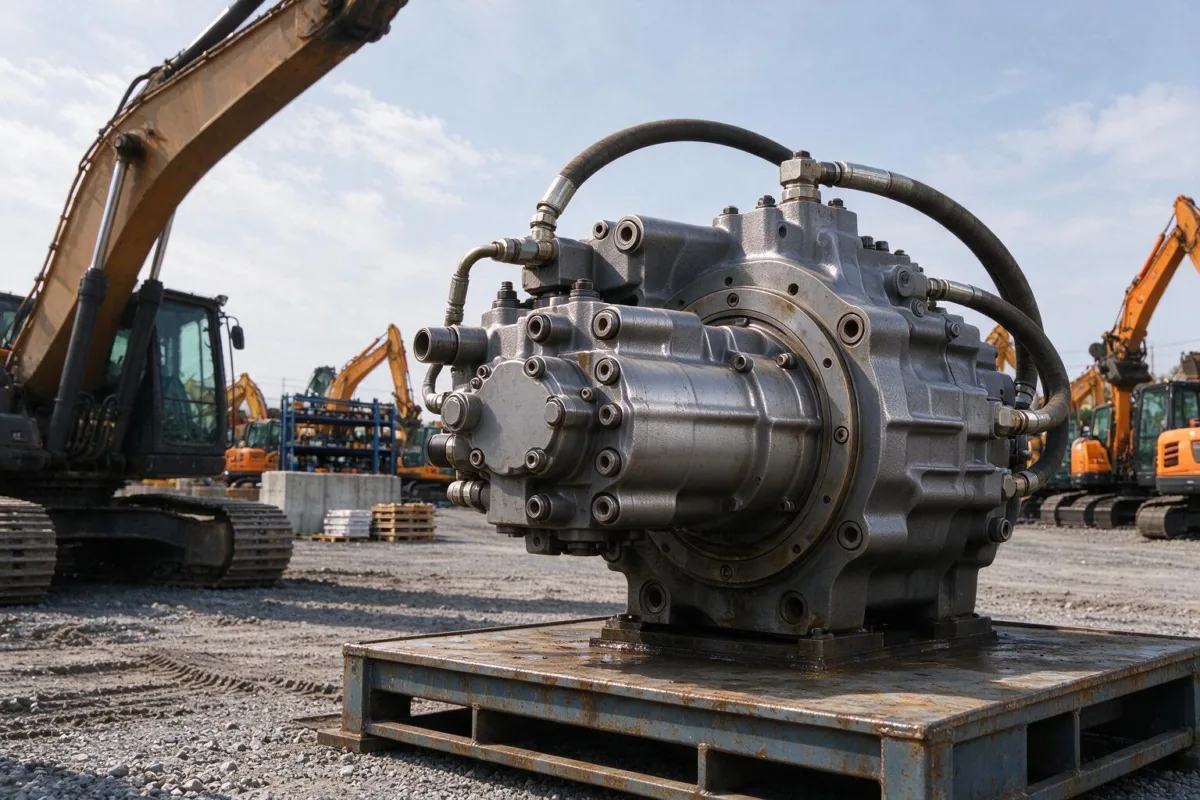
Liugong excavators are commonly grouped into small, medium, and large classes, and hydraulic pump requirements vary accordingly with tonnage and duty cycle. This Liugong excavator hydraulic pump selection guide follows that same class-based logic, because pump selection for replacement or repair should match the machine class, the rated system pressure, and the flow demand of the installed work equipment. Getting these three parameters right matters most on mixed fleets, where a pump that suits one tonnage may be undersized or over-pressured on another. The sections below set out typical pump types and configurations by excavator class, from compact models through to larger earthmoving machines.
Hydraulic Pump Types Used in Liugong Excavators
Liugong excavators use several hydraulic pump architectures depending on model size, duty cycle, and control strategy. Matching a replacement pump to the original configuration is critical, since displacement, control type, and mounting interface vary across the range.
Axial Piston Pumps
Axial piston pumps are the most common main pump type in medium and large Liugong excavators, such as the 900-series and larger E-series machines. These units offer variable displacement and high operating pressure, typically in the 35–40 MPa class for main circuits. Swashplate or bent-axis designs are used, with displacement controlled by a regulator that responds to system pressure and pilot signals.
Gear Pumps
Gear pumps are often used as pilot pumps or charge pumps, and in smaller models where cost and simplicity are prioritized. They provide fixed displacement and are typically found in pilot circuits supplying control pressure to the main pump regulators and valve spools.
Load-Sensing and Negative Flow Control
Many Liugong models use load-sensing or negative flow control systems. These architectures affect pump selection and compatibility: a pump intended for a negative flow control machine will not perform correctly in a load-sensing circuit without the matching regulator and compensation hardware.
Tandem and Multiple Pump Configurations
Some models use tandem or multiple pump configurations to supply independent circuits for boom, arm, bucket, and travel functions. In these arrangements, each pump section must match its assigned circuit’s flow and pressure requirements.
E-Series Control Integration
Newer E-series models incorporate electric displacement control and proportional valve integration. Replacement pumps for these machines require compatible control interfaces, including the correct solenoid, sensor, and connector configuration, to maintain communication with the machine’s electronic control unit.
Key Specifications for Pump Matching
Selecting a replacement hydraulic pump for a Liugong excavator requires matching several specifications to the original equipment. A pump that deviates from these parameters can alter cycle times, reduce fuel efficiency, or cause premature failure of downstream components.
Displacement
Displacement, measured in cc/rev, must match the original equipment specification. A lower displacement reduces flow and slows actuator response; a higher displacement can overload the engine and disturb the matching between pump output and the main valve’s flow capacity. On models such as the 920E or 922E, the main pump displacement is tied to the engine’s torque curve and the hydraulic circuit’s design flow, so substitution with a different displacement is not a like-for-like replacement.
Pressure Ratings
Rated and peak pressure ratings should meet or exceed the system’s operating requirements. Medium excavators in the Liugong range typically operate in the 25–35 MPa band, with peak pressure relief settings above the rated working pressure. A pump with lower pressure capability than the original will trigger relief at reduced loads and compromise digging force.
Flow Rate
Flow rate at rated engine speed determines actuator speed and must align with the machine’s hydraulic circuit design. Flow is a function of displacement and drive speed, so both values need verification against the original pump data.
Control Type
Control type must be compatible with the excavator’s main valve and electronic control unit. Load-sensing, positive control, and negative control pumps respond differently to valve signals, and an incompatible control scheme will cause poor metering, sluggish response, or ECU fault codes.
Physical Fitment
Mounting flange, shaft type (spline or keyed), and port sizes must be verified against the original pump to ensure proper fitment. Pilot diameter, bolt pattern, and port thread standards vary between pump families and should be checked before installation.
| Specification | Verification Method |
|---|---|
| Displacement (cc/rev) | Nameplate and parts catalog |
| Rated/peak pressure | Relief valve settings, pump data sheet |
| Flow at rated speed | Displacement × drive speed |
| Control type | Main valve and ECU compatibility |
| Flange, shaft, ports | Dimensional check against original |
Model-Specific Pump Selection Considerations
Pump requirements vary significantly across the Liugong excavator range, and selection should begin with the specific model and serial number.
For the 920E and 922E models, pumps with displacement around 2×80 cc/rev and load-sensing control are typical. Load-sensing hydraulics match flow to demand, which suits the general earthmoving duties these machines are commonly assigned. Because Liugong has revised pump specifications across production runs, the machine’s serial number break must be verified before ordering; a pump correct for an early unit may not suit a later one.
The 933E and 936E series often use higher-displacement pumps, for example 2×112 cc/rev, with reinforced components intended for high-duty applications. These larger machines place greater continuous demand on the hydraulic system, so internal component strength and cooling capacity matter as much as nominal flow.
Smaller models such as the 906D may use single or tandem gear pumps rather than variable-displacement piston units. Confirm whether the application requires auxiliary flow for attachments before specifying a replacement.
When upgrading or replacing a pump, consider whether the machine runs hydraulic breakers or shears. These attachments may require additional flow and pressure compensation beyond the standard configuration.
Always cross-reference the pump part number with Liugong parts catalogs and service bulletins for the specific machine serial number range.
| Model | Typical Pump Configuration | Control Type |
|---|---|---|
| 920E / 922E | 2×80 cc/rev | Load-sensing |
| 933E / 936E | 2×112 cc/rev, reinforced | Load-sensing |
| 906D | Single or tandem gear pump | Gear, fixed displacement |
Aftermarket vs. OEM Pump Options
OEM hydraulic pumps for Liugong excavators are supplied through the authorized dealer network and carry the manufacturer’s warranty. These units serve as the reference point for fit, mounting configuration, displacement, and pressure-flow characteristics on models such as the CLG920E, CLG922E, and CLG936E. Where warranty coverage and exact replacement are priorities, the OEM channel is the most direct route.
Aftermarket pumps are offered by independent suppliers and vary widely in quality. Buyers should request bench test reports (flow at rated pressure, volumetric efficiency, relief valve settings) and material certifications for the cylinder block, valve plate, and pistons before committing to a supplier. Pumps without documented testing should be treated with caution, particularly on machines running high-duty cycles.
Remanufactured pumps can be cost-effective when the core is rebuilt to OEM specifications. Acceptable remanufacturing includes new wear components (pistons, slippers, valve plate, swashplate bearings where applicable) and performance testing to flow and pressure standards. A remanufactured unit that reuses worn rotating groups is not equivalent, regardless of external appearance.
For critical applications, OEM or high-quality aftermarket pumps with documented testing are recommended to limit unplanned downtime and secondary damage to travel motors, control valves, and the main relief circuit. Total cost of ownership should guide the decision: a lower-priced pump with a shorter service life typically raises long-term maintenance costs through repeat labor, fluid replacement, and associated component wear.
| Option | Warranty | Documentation to request |
|---|---|---|
| OEM | Manufacturer warranty via dealer | Part number verification, factory test data |
| Aftermarket | Supplier-dependent | Bench test report, material certificates |
| Remanufactured | Rebuilder-dependent | Rebuild specification, wear component list, performance test |
Verification and Procurement Checklist
Before ordering a replacement hydraulic pump for a Liugong excavator, confirm the machine identity from the nameplate or the parts catalog. Record the full model designation (for example, 922E, 933E, or 950E), the machine serial number, and the pump part number. Serial number breaks within a model series can correspond to different pump configurations, so the serial number should be matched against the parts catalog rather than relying on the model alone.
Request the following technical data from the supplier and compare it against the original pump:
- Displacement (cc/rev) and rated/maximum pressure (MPa or bar)
- Control type (negative flow control, positive flow control, or load sensing)
- Mounting flange pattern, shaft spline or key dimensions, and port sizes
A dimensional mismatch at the mounting flange or shaft is a common cause of fitment failure and should be checked before shipment.
Inspect the pump for visual quality indicators: clean casting surfaces without porosity or flash, uniform paint coverage, legible and correctly positioned part markings, and protective caps on all ports. Missing port caps suggest poor handling practice.
Request a performance test report covering flow, pressure, and internal leakage at specified test conditions (for example, rated pressure at rated speed). A supplier unable to provide test data for the specific unit or batch warrants caution.
Finally, verify warranty terms, the return policy for incorrect fitment, and traceability documentation for critical components such as the regulator valve and rotating group. Confirm these points in writing before purchase.
Installation and Maintenance Best Practices
Correct installation and ongoing maintenance determine how long a replacement hydraulic pump will last on a Liugong excavator. The following practices apply to the main hydraulic pumps used across the 900F and 900E series, including the Kawasaki and Rexroth units fitted to models such as the CLG920E, CLG922E, and CLG936E.
Pre-Installation Flushing
Before a new pump is mounted, flush the hydraulic system and replace the filters. Debris from a failed pump can remain in the reservoir, lines, and cooler, and will migrate into the new unit once oil begins to circulate. Flushing should be performed according to the service manual, followed by installation of new suction, return, and pilot filters.
Oil Quality and Grade
Use the hydraulic oil grade specified in the machine’s operation manual, and keep the oil clean. Contamination is a leading cause of pump failure; particles and water accelerate wear on the piston slippers, cylinder block, and valve plate. Store oil in sealed containers and fill through a filtered transfer unit.
Priming and First Startup
Follow the manufacturer’s procedures for pump priming and initial startup. Fill the pump case with clean oil before mounting, and do not run the engine at high speed immediately after installation. Air left in the pump can cause cavitation and dry running, damaging the rotating group within seconds.
Pressure and Control Settings
After installation, check and adjust main relief pressure, pilot pressure, and regulator settings to match the machine’s specifications. Verify settings with a calibrated gauge at the test ports.
Oil Analysis and Filter Schedule
Implement regular oil analysis and filter changes to extend pump life and detect wear early. The table below outlines a typical schedule.
| Interval | Action |
|---|---|
| 50 hours after installation | First filter change, oil sample |
| 250 hours | Oil sample, inspect filters |
| 500 hours | Filter replacement, full oil analysis |
| 1,000 hours | Oil change per manual, control calibration check |
Elevated iron or copper in oil samples can indicate early wear in the pump or travel motors and should prompt inspection before failure occurs.
Common Selection Mistakes to Avoid
Hydraulic pump selection for Liugong excavators involves several specification checks that are frequently skipped, and each omission carries a distinct operational cost.
Price-Led Selection Without Specification Verification
Choosing a pump on lowest price alone, without confirming displacement, pressure rating, control type, and mounting interface, often results in a unit that fits physically but underperforms in service. Pressure and flow ratings below the machine’s requirements accelerate wear on the pump and downstream components and can lead to premature failure.
Ignoring Control Type Compatibility
Liugong excavators use specific control arrangements, including negative flow control, positive flow control, and load-sensing systems depending on model and series. A pump whose control type does not match the machine’s main valve and electronic control architecture can produce erratic actuator response, unstable engine load, or damage to the main control valve and controller inputs.
Incorrect Displacement
Displacement mismatches alter cycle times, fuel consumption, and stress on the engine, main valve, and cylinders. A pump with higher displacement than specified may overload the engine and hydraulic system; a lower-displacement unit slows work functions and can cause the operator to push the machine beyond its design limits.
Overlooked Mounting and Shaft Details
Spline count, shaft diameter, pilot diameter, flange bolt pattern, and mounting orientation must all be confirmed. Overlooking these details causes installation delays and, if forced, misalignment that damages the shaft seal and coupling.
Part Number Not Confirmed Against Serial Number
Liugong applies running production changes across model series. Failing to verify the pump part number against the machine’s serial number can result in an incompatible pump version, particularly where control valves or regulator settings were revised mid-series.